Protein Powders Tested for Heavy Metals: Which Products Have the Lowest Lead Levels?

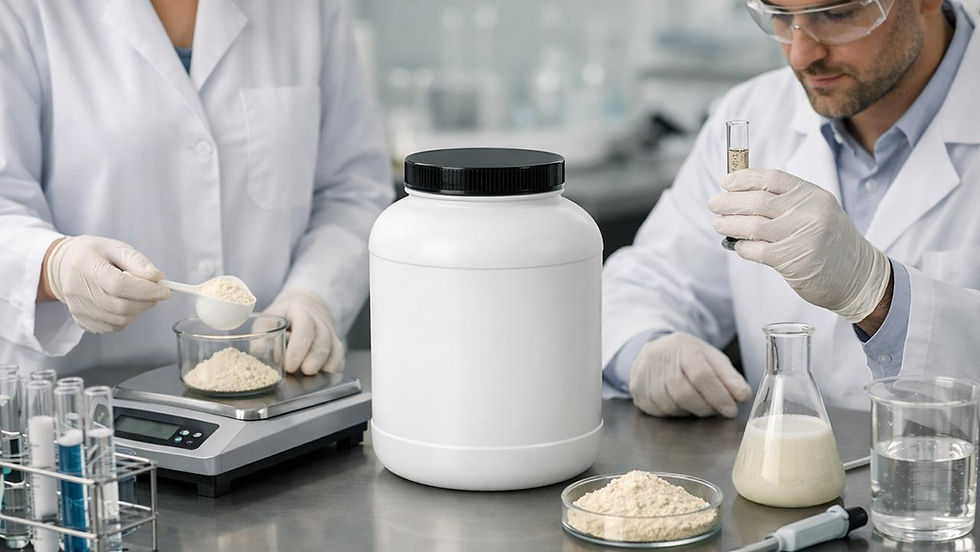
Protein powder is a staple for millions of people trying to build muscle, recover after workouts, or make it easier to meet their daily protein needs. But before adding another scoop to your smoothie, there's an important question to consider: how much lead and how many other heavy metals could be hiding in that powder?
Recent independent testing has raised concerns about several popular protein supplements sold in the United States. Some products contained substantially more lead per serving than Consumer Reports' food-safety experts considered acceptable for daily consumption.
The encouraging news? Not every product showed the same results. Follow-up testing found that some additional protein powders had comparatively low levels of lead, demonstrating that lower-contamination products are possible.
If you're shopping for a new supplement, the goal isn't to find a package with the most impressive health claims. It's to find a product with credible evidence behind it.
Here's what the research reveals, how to evaluate protein powders for heavy metals, and what to look for before making your next purchase.
Why Is There Lead in Protein Powder?
Lead is a toxic metal that can enter the food supply through environmental contamination. Plants absorb substances from soil and water as they grow, and ingredients used in animal-derived products can also be exposed to environmental contaminants.
Protein powders are made by concentrating ingredients such as milk, peas, rice, soy, and other protein sources. If the original ingredients contain heavy metals, some of those contaminants may remain in the finished product.
Several factors can influence the final amount:
Soil conditions: Plants can absorb naturally occurring or pollution-related heavy metals.
Ingredient sourcing: Crops grown in different environments may have different contamination profiles.
Manufacturing practices: Ingredient handling and quality-control procedures can influence product consistency.
Flavouring ingredients: Cocoa and other plant-derived ingredients may contribute to heavy-metal levels in certain formulations.
Lead isn't the only contaminant worth checking. Cadmium, arsenic, and mercury may also be relevant, depending on the product.
The presence of a detectable metal doesn't automatically mean a product will cause harm. The amount consumed, frequency of use, and total exposure all matter. Nevertheless, lead exposure is worth minimizing because lead can accumulate in the body and can cause harm over time.
What Independent Testing Has Revealed
Two Consumer Reports investigations provide a useful starting point for understanding the issue.
The October 2025 investigation
On October 14, 2025, Consumer Reports published laboratory findings for 23 popular protein powders and ready-to-drink shakes. More than two-thirds of the tested products contained more lead in a single serving than its food-safety experts considered acceptable for a day. Some exceeded that benchmark by more than tenfold.
The results raised concerns because protein supplements are often consumed repeatedly. Someone using a shake every day has a different exposure pattern from someone who drinks one occasionally.
However, the investigation did not test every protein powder available. Its results apply to the particular products and samples examined, not every brand, flavour, or production batch on the market.
The January 2026 follow-up
Consumer Reports subsequently tested five additional chocolate protein powders requested by readers: Clean Simple Eats, Equate, Premier Protein, Ritual, and Truvani.
The organization reported substantially lower lead levels in this group than in many products from its earlier investigation. It also evaluated other heavy metals, including arsenic, cadmium, and mercury.
These results offer a useful counterpoint to alarming headlines. Higher contamination isn't inevitable, and some manufacturers can produce products with comparatively low measured levels.
Still, the findings shouldn't be treated as a universal safety certification. They reflect the products and samples tested at that time. Formulations and manufacturing practices can change.
The takeaway for shoppers: Product-specific laboratory results are more useful than broad claims about an entire brand or category.
Which Protein Powders Have Shown Lower Lead Levels?
Consumer Reports' January 2026 follow-up identified five products with comparatively low lead levels in the samples tested:
Clean Simple Eats protein powder
Equate protein powder
Premier Protein powder
Ritual protein powder
Truvani protein powder
These are examples of products examined in that investigation, not a definitive ranking of the safest protein powders available today.
The exact formulation and flavour matter. Testing one chocolate powder doesn't establish that a company's vanilla version, another product line, or every subsequent production batch has the same contaminant levels.
Before buying any of these products—or another brand entirely—look for the most recent applicable laboratory documentation.
It's also important not to confuse a low measured lead concentration with proof that a product contains no lead whatsoever. Laboratory results depend on the sample, method, and detection limits.
Whey vs. Plant-Based Protein: Which Has Less Lead?
One of the most common questions is whether whey protein is a better choice than plant-based protein when it comes to heavy metals.
The answer isn't as simple as choosing one category over the other.
Whey protein
Whey protein is derived from milk and is available in forms such as whey concentrate and whey isolate. It can be a convenient way to increase protein intake, but its dairy origin doesn't guarantee that every product will have low heavy-metal levels.
Ingredient quality, manufacturing controls, and finished-product testing still matter.
Plant-based protein
Plant-based powders may use pea, rice, soy, or blends of different ingredients. Because plants grow in soil, environmental conditions and agricultural sourcing can affect the contaminants present in the raw ingredients.
That doesn't mean every plant-based protein powder is contaminated at a concerning level. It means consumers should compare individual products rather than assume all plant proteins have the same contamination profile.
What about organic protein powder?
Organic certification concerns how ingredients are produced under the relevant standards. It doesn't automatically establish that a finished product is free of heavy metals.
If your priority is minimizing lead exposure, seek laboratory results that explicitly measure lead. An organic label and a heavy-metal report answer different questions.
How to Choose a Protein Powder With Lower Heavy Metals
You don't need a chemistry degree to make a more informed decision. You do need to know what credible testing looks like.
1. Look for independent laboratory results
A manufacturer that publishes a detailed certificate of analysis provides more useful information than one that simply describes its product as clean or pure.
A good report should identify the product, testing date, relevant batch or lot where available, measured contaminants, units, and analytical method.
Independent testing can strengthen confidence in a result, especially when the laboratory's qualifications can be verified. However, the phrase "third-party tested" isn't enough by itself.
Check whether lead was actually included in the test panel.
2. Understand the amount of lead per serving
Laboratory reports may express lead concentration in parts per million (ppm), milligrams per kilogram (mg/kg), or micrograms per serving.
For a powder, 1 ppm is equivalent to 1 mg/kg. To calculate the amount in a serving, multiply the concentration by the serving's mass in kilograms.
For example, if a hypothetical powder contains 0.2 mg of lead per kilogram and a serving weighs 30 grams:
0.2 mg/kg × 0.03 kg = 0.006 mg, or 6 micrograms per serving.
This example illustrates the conversion only; it is not a measured result for a commercial product.
Comparisons are most useful when the serving sizes, units, and testing methods are compatible.
3. Check more than lead
A low lead result doesn't tell you everything about a product's contaminant profile.
Where available, look for testing that includes:
Lead
Cadmium
Arsenic
Mercury
Arsenic results require particular care because inorganic arsenic and total arsenic aren't interchangeable measures of health risk.
4. Understand what certification covers
Sports-supplement certifications can be useful for athletes concerned about prohibited substances. But a certification designed for that purpose doesn't necessarily establish that a product has been tested for heavy metals.
Look for documentation that explicitly reports lead levels instead of relying on a certification logo alone.
5. Ask the manufacturer specific questions
If test results aren't publicly available, ask the company:
Does the finished product undergo lead testing?
Are cadmium, arsenic, and mercury also measured?
Is every production batch tested, or is testing performed periodically?
Can you provide a recent certificate of analysis?
Which laboratory performs the testing?
Specific answers supported by documentation are more informative than general assurances about purity.
What Does a Lead Test Result Actually Mean?
Detectable lead doesn't automatically mean a product will cause immediate harm. But it also shouldn't be dismissed simply because the amount appears small.
Daily exposure matters
Consider how often you use the product, how many scoops you consume, and whether other foods or environmental sources contribute to your overall exposure.
A powder with a relatively low measured concentration may still deserve consideration if you consume several servings every day over a long period.
Understand the benchmark being used
Consumer Reports used a daily benchmark of 0.5 micrograms of lead in its investigations, based on California Proposition 65's maximum allowable dose level.
That figure is a particular comparison benchmark, not a universal boundary between harmless and dangerous exposure. Different authorities use different standards for different purposes.
A product exceeding that benchmark doesn't automatically mean one serving will cause immediate harm. Likewise, a result below it doesn't guarantee zero risk.
The sensible objective is to reduce avoidable exposure and choose products with comparatively low measured contamination.
What if a laboratory reports "not detected"?
A result reported as "not detected" doesn't necessarily prove that a product contains absolutely no lead. It means the amount was below the relevant detection or reporting limit of the method used.
When comparing reports, look at the detection limit as well as the headline result.
Do You Need Protein Powder Every Day?
Protein powder can be useful for people who struggle to meet their protein needs through meals, have limited time to prepare food, or have increased protein requirements.
But supplements aren't essential for everyone.
Eggs, Greek yogurt, milk, fish, tofu, beans, and lentils can all provide protein as part of a varied diet. Whole foods also supply other nutrients that a protein supplement may not contain.
If you can comfortably meet your protein needs through food, there's no requirement to add a supplement simply because it's popular.
If you do use protein powder, choose it for a reason, look for transparent testing, and avoid assuming an attractive label guarantees purity.
If you've already consumed a product mentioned in a concerning test report, don't assume you've been harmed. A laboratory finding indicates a potential exposure concern, not a diagnosis. If you're concerned about substantial or prolonged exposure, discuss your circumstances with a qualified healthcare professional.
Frequently Asked Questions
Which protein powders have been tested for lead?
Consumer Reports tested 23 protein powders and ready-to-drink shakes in October 2025, then tested five additional chocolate protein powders in January 2026. Its findings apply to the specific products and samples examined, rather than every supplement on the market.
Which protein powder has the lowest lead level?
There isn't a defensible universal winner without defining the products being compared and reviewing their applicable laboratory results. Consumer Reports reported comparatively low lead levels in its January 2026 group, but that investigation alone doesn't establish a complete ranking of every available product.
Are plant-based protein powders more likely to contain lead?
Some plant-based products have shown elevated heavy-metal levels, but the protein source alone can't reliably predict a product's lead concentration. Product-specific testing is more useful than broad assumptions about plant-based or dairy-based supplements.
Does third-party testing guarantee a lead-free product?
No. Check whether lead was actually measured, what the results were, and what the laboratory could detect. Testing for prohibited sports substances doesn't automatically include heavy metals.
Is organic protein powder free of heavy metals?
Not necessarily. Organic certification and heavy-metal testing address different questions. If lead exposure is your concern, seek independent laboratory results that explicitly include lead.
Can I keep using a protein powder if lead was detected?
The appropriate response depends on the measured amount, frequency of consumption, and available evidence. If a credible investigation identifies unusually high levels in your exact product, consider switching while you review the information. A healthcare professional can help if you're concerned about your exposure.
How can I check whether my current protein powder contains lead?
Look for the manufacturer's certificate of analysis for the exact product and, ideally, its production batch. Check the testing date, units, serving size, and list of contaminants. If the company doesn't provide the information, ask whether it can supply a recent report.
Products, Tools and Resources
Consumer Reports: Review its October 2025 investigation and January 2026 follow-up for independent findings on specific protein powders.
Manufacturer certificates of analysis: Request current, product-specific laboratory documentation that explicitly includes lead and other relevant heavy metals.
Accredited analytical laboratories: Look for laboratories with appropriate accreditation and methods for measuring contaminants in food and supplements.
Whole-food protein sources: Consider eggs, yogurt, milk, fish, tofu, beans, and lentils as alternatives or complements to protein supplements.