Houttuynia Cordata Benefits: The Ancient Medicinal Leaf Modern Science Is Finally Catching Up To

Updated: Apr 5
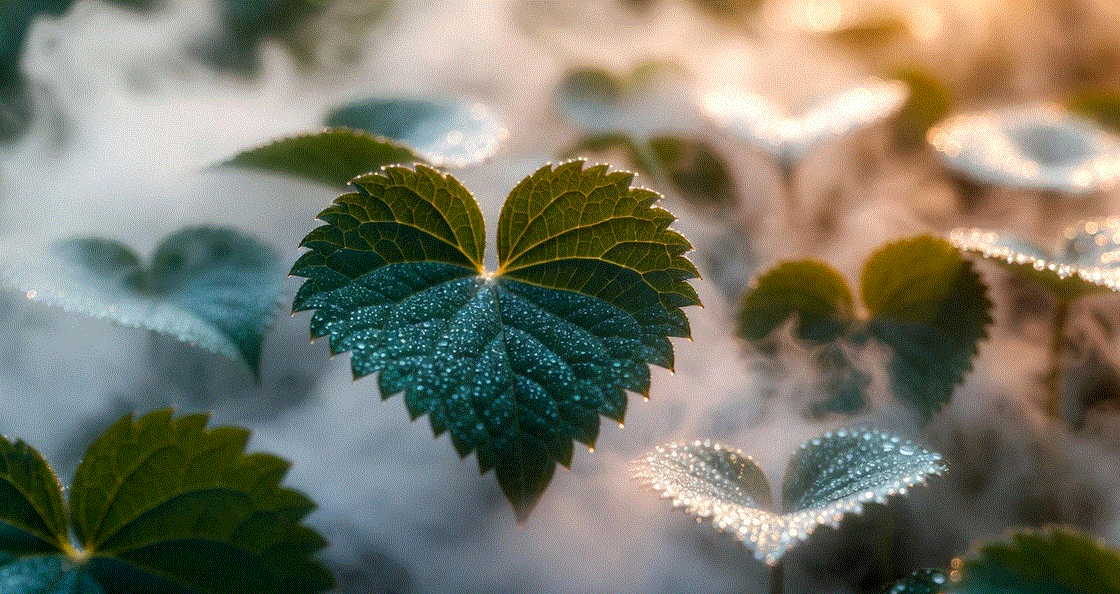
Houttuynia cordata doesn’t try to stand out.
It doesn’t tingle. It doesn’t burn. It doesn’t promise instant results.
It works quietly.
For centuries across East Asia, this small, heart-shaped leaf—often called fish mint—has been used to calm inflammation, support the lungs, and settle irritated skin. What once lived entirely in traditional medicine is now starting to draw attention in modern research.
Not because it’s dramatic.
Because it’s consistent.
Why Its Subtlety Is What Makes It Effective
Most modern treatments aim to force a result.
Reduce this. Kill that. Strip everything back and start again.
Houttuynia takes a different approach.
It supports regulation.
Inside the plant are compounds like quercetin and other flavonoids—known for interacting with inflammatory pathways in a more measured way.
And that matters.
Because inflammation rarely exists in isolation. It’s often the underlying thread behind acne, redness, gut irritation, and immune sensitivity.
Instead of pushing hard against symptoms, houttuynia works by helping those signals settle.
What Happens on the Skin
This is where many people notice it first.
Redness begins to soften.Irritation feels less reactive.Breakouts become less aggressive.
Not because the skin is being stripped—but because it’s being stabilized.
Unlike harsher treatments that disrupt the skin barrier, houttuynia tends to work alongside it. It supports the microbiome rather than wiping it out, which is a key difference for long-term skin health.
When paired with barrier-support ingredients like ceramides or calming compounds like centella or niacinamide, the effect becomes more noticeable.
Stronger skin.Less reactivity.More consistency.
What Happens Internally
Used as a tea or extract, houttuynia extends beyond the skin.
Traditionally, it’s been associated with respiratory support—helping clear what older systems described as “heat” in the lungs. In modern terms, this often relates to inflammation and immune response.
It may also support gut balance, particularly in cases where irritation or microbial imbalance is involved.
But again, the key point is how it works.
Not by overstimulating the system.
By helping regulate it.
What Most People Get Wrong
The expectation.
People look for fast, visible change.
And when it doesn’t happen immediately, they assume something isn’t working.
Houttuynia doesn’t operate like that.
Surface-level improvements—like reduced redness—can appear relatively quickly.
But deeper changes take time.
Skin needs to recalibrate.Inflammatory patterns need to settle.The system needs consistency.
How to Use It Without Disrupting Progress
For skin, the simplest approach is often the best.
Use it alongside gentle, supportive products. Avoid stacking it with overly aggressive actives that can counteract its calming effect.
For internal use, quality matters.
Well-sourced dried leaves or standardized extracts tend to produce more reliable results. Higher doses aren’t necessarily better—steady, moderate use tends to work more effectively.
The Real Value Most People Overlook
Houttuynia isn’t a quick fix.
It’s a stabilizer.
And that makes it more valuable than it first appears.
Because once the system stabilizes—whether it’s skin, gut, or immune response—other improvements tend to follow naturally.
Less reaction.More resilience.Better baseline health.
Products / Tools / Resources
High-quality dried houttuynia cordata leaves for tea
Standardized extract capsules (third-party tested for purity)
Houttuynia-based calming serums paired with centella or niacinamide
Barrier-repair moisturizers with ceramides for skin resilience
Glass teapots or infusers for consistent herbal preparation